On-Site Liquid Nitrogen Generation: Technology, Applications, and When to Adopt It
Liquid nitrogen is a critical resource across a wide range of scientific and industrial applications, used for cryogenic cooling, sample preservation, and precise thermal control. Traditionally supplied by industrial gas providers, it can now be produced on site using compact, automated generation systems.
This evolution enables greater operational autonomy by reducing logistical constraints, ensuring continuous supply, and optimizing costs in high-demand environments.
Liquid Nitrogen: A Critical Resource Across Modern Industries
Liquid nitrogen (LN₂) is one of the most widely used cryogenic liquids across industry, research, and advanced technologies. Although it is often perceived as a simple consumable, it is in fact a strategic technical resource in many scientific and industrial environments.
Nitrogen makes up approximately 78% of the Earth’s atmosphere. When cooled to its boiling point of −196 °C at atmospheric pressure, it liquefies and acquires thermal properties that are particularly useful for rapid cooling, the preservation of sensitive materials, and the control of processes requiring extremely low temperatures.
These characteristics explain its widespread use across a broad range of environments, including research laboratories, healthcare facilities, food processing industries, electronics manufacturing, and specialized industrial processes.
Why Is Liquid Nitrogen So Widely Used?
The widespread use of liquid nitrogen is driven by several key physical and chemical properties:

Extremely rapid cooling: its ultra-low temperature enables efficient cooling of materials, equipment, and sensitive products.

Chemical inertness: nitrogen provides a protective atmosphere that reduces oxidation and prevents unwanted chemical reactions.

Naturally occurring gas: as a major component of air, nitrogen can be safely released into the atmosphere under proper operating conditions and adequate ventilation, without generating residues or chemical by-products.
These properties explain why liquid nitrogen has become an essential cryogenic fluid across a wide range of industries. The following sections explore its applications, production methods, and the principles and implementation of on-demand generation—an approach that is increasingly adopted in scientific and industrial environments.
- Where Is Liquid Nitrogen Used?
- Traditional Liquid Nitrogen Production and Supply Methods
- Operational Benefits of On-Site Liquid Nitrogen Generation
- When Does On-Site Liquid Nitrogen Generation Make Sense?
- On-Site Liquid Nitrogen Generation: Principles and How It Works
- Infrastructure and Implementation Considerations
- Conclusion
1. Where Is Liquid Nitrogen Used?
Due to its cryogenic properties, liquid nitrogen is widely used across scientific, medical, and industrial applications where precise temperature control is critical.
Scientific Research and Cryogenics
In research environments, liquid nitrogen is used for cooling scientific instruments, cryogenic preservation of biological samples, and thermal stabilization of sensitive detectors. It is commonly found in nuclear magnetic resonance (NMR) systems, cryogenic detectors, and comprehensive two-dimensional gas chromatography (GC×GC) systems using cryogenic modulation.
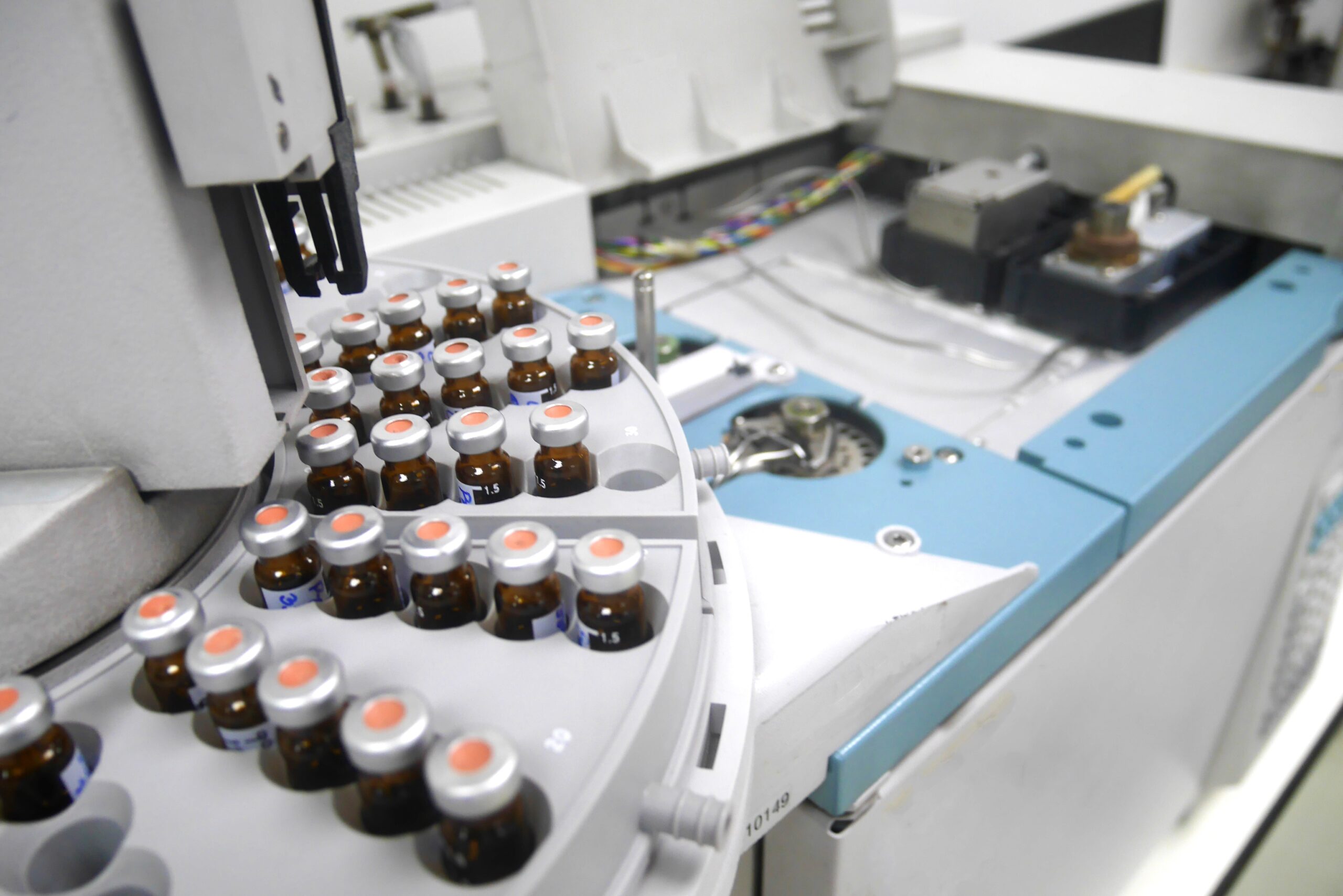
It is also used in cryogenic traps (cryotraps) for vacuum systems, in certain quantum physics experiments, and for pre-cooling cryogenic circuits in helium liquefaction systems, helping to reduce liquid helium consumption.
Healthcare and Life Sciences
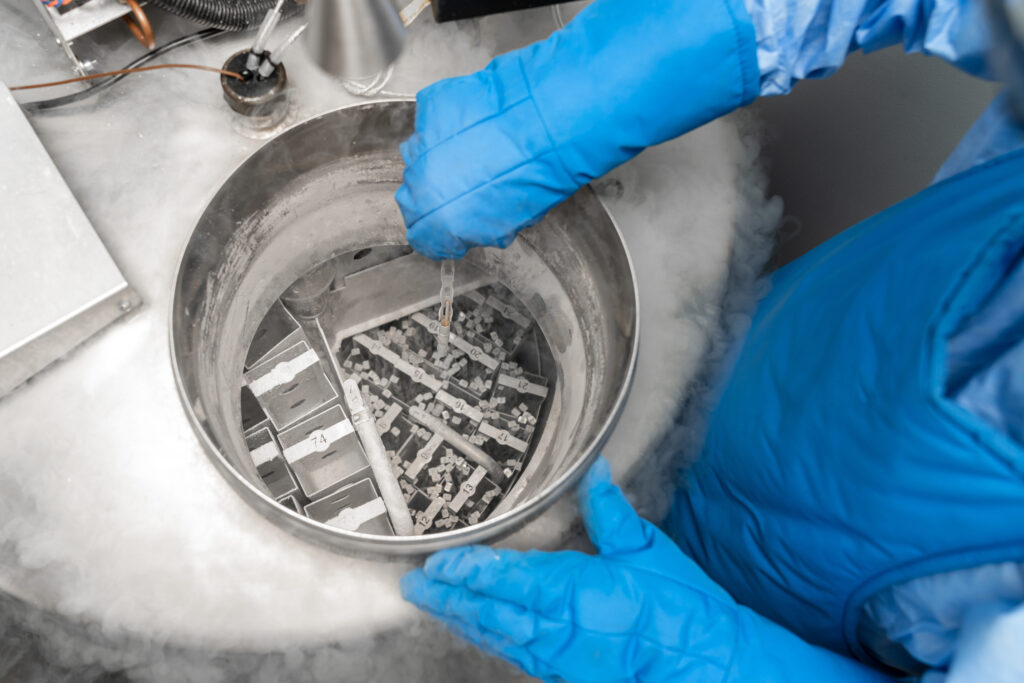
In the biomedical field, liquid nitrogen plays a central role in the cryopreservation of biological materials. It enables the long-term storage of cells, tissues, blood samples, and genetic material. Medical biobanks and research centers rely on these systems to preserve biological samples at extremely low temperatures.
In vitro fertilization (IVF) clinics also use liquid nitrogen to store sperm, oocytes, and embryos over extended periods.
Additionally, cryotherapy and cryosurgery use extreme cold to treat certain skin lesions and tissue abnormalities.
Food Processing and Cold Chain
In the food industry, liquid nitrogen is used for ultra-fast freezing, particularly in Individually Quick Frozen (IQF) processes. This technique helps preserve the texture, cellular structure, and overall quality of food products.

It is also used in cryogenic grinding of heat-sensitive materials such as spices, polymers, and plant-based products, as well as in operations requiring precise temperature control throughout the cold chain.
In some industrial processes, nitrogen is also used to create an inert atmosphere during food packaging.
Manufacturing and Industrial Processes
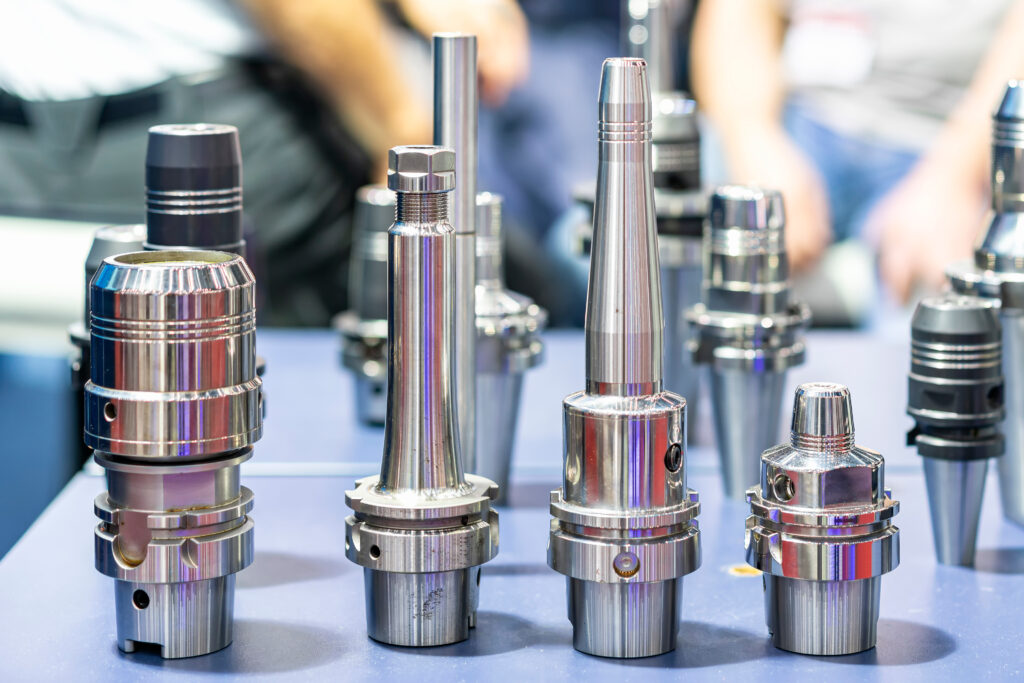
In the manufacturing industry, liquid nitrogen is used in various processes involving rapid temperature changes. It is commonly applied in shrink fitting, a technique that involves cooling a metal component to facilitate assembly.
It is also used in cryogenic deburring of polymer and rubber parts, an industrial process in which burrs become brittle at very low temperatures and can be removed mechanically without damaging the component.
Liquid nitrogen is further used in cryogenic treatment of metals to enhance their mechanical properties, as well as in cooling electronic components during low-temperature performance and reliability testing.
In certain research and engineering applications, it is also used for cryogenic testing of materials, allowing evaluation of their behavior under extreme thermal conditions.
Liquid nitrogen is used across a wide range of scientific, medical, and industrial applications. The table below highlights selected use cases along with the equipment typically involved.
Key Liquid Nitrogen Applications by Industry
| Sector | Applications | Typical Equipment |
|---|---|---|
| 🔬 Scientific Research and Cryogenics | Cooling of scientific instruments, NMR systems, cryogenic detectors, GC×GC cryogenic modulation, pre-cooling of helium liquefaction systems | Cryostats, superconducting magnets, infrared detectors, GC×GC modulators, helium liquefiers, cryotraps for vacuum systems |
| 🧬 Healthcare and Life Sciences | Cryopreservation of biological samples, storage of cells and tissues, in vitro fertilization (IVF), cryotherapy and cryosurgery | LN₂ cryogenic storage tanks, biobank systems, embryo storage tanks, cryotherapy devices |
| 🍽 Food Processing | Ultra-fast freezing (flash freezing / IQF), cryogenic grinding of heat-sensitive ingredients, temperature control in the cold chain | Cryogenic freezing tunnels, IQF systems, cryogenic grinders, modified atmosphere packaging systems |
| ⚙ Manufacturing Industry | Shrink fitting, cryogenic deburring of molded parts, cooling of electronic components | Cryogenic deburring machines, LN₂ cooling baths, environmental test chambers, shrink fitting systems |
| 🧪 Specialized Applications | Thermal testing of materials, industrial cryogenic processes, molecular gastronomy techniques | Environmental chambers, cryogenic test benches, cryogenic culinary equipment |
The diversity and growth of these applications raise a key question: how is liquid nitrogen produced and supplied? The following section explores the traditional methods of production and distribution.
2. Traditional Liquid Nitrogen Production and Supply Methods
Liquid nitrogen used in industrial, research, and medical applications is typically produced in large-scale cryogenic air separation units (ASUs). These facilities take advantage of the composition of atmospheric air, which consists primarily of nitrogen, along with oxygen and smaller amounts of other gases.
In this process, air is first compressed and purified to remove moisture and contaminants. It is then cooled to the point of liquefaction and separated through fractional distillation, allowing nitrogen to be isolated at large scale, often alongside the production of oxygen and argon.
Once produced, liquid nitrogen is stored in cryogenic tanks and distributed to end users through various logistical solutions.
High-consumption sites are typically supplied by cryogenic tanker trucks that fill on-site storage tanks, while smaller demand is often met using transportable dewars.
However, this centralized supply model involves transportation and storage logistics that can become increasingly complex as consumption grows or when supply continuity becomes critical.


3. Operational Benefits of On-Site Liquid Nitrogen Generation
The limitations of the traditional supply model are prompting some organizations to consider on-site liquid nitrogen generation as an alternative to optimize operations. This approach can offer significant advantages, particularly in high-consumption environments where supply continuity is critical.
Reduced Dependence on Logistics

Local production reduces dependence on external liquid nitrogen deliveries. In high-consumption environments, it simplifies supply management by minimizing constraints related to transportation, delivery scheduling, and large-volume storage.
Operating Cost Optimization
In environments where liquid nitrogen consumption is high and stable, on-site production can help reduce operational costs associated with transportation, tank rental, and logistics tied to regular deliveries. It also enables better long-term cost control by bringing production closer to the point of use.
Under these conditions, the resulting savings can enable a relatively rapid return on investment, with typical payback periods ranging from 12 to 24 months depending on consumption levels and operating conditions.

Availability and Demand-Driven Production

On-site liquid nitrogen production enables output to be aligned with operational demand. This on-demand capability improves supply continuity and reduces risks associated with delivery disruptions and consumption variability.
Reduced Losses and Environmental Impact
Local production can reduce losses associated with transportation and extended storage of liquid nitrogen. By decreasing delivery frequency and transport distances, it can also help lower the environmental impact of supply logistics.

However, the relevance of these benefits depends on the specific conditions of each facility. It is therefore important to determine when on-site liquid nitrogen generation is the most suitable approach.
4. When Does On-Site Liquid Nitrogen Generation Make Sense?
On-site liquid nitrogen generation is not always the most suitable solution for every user. For low or intermittent consumption, delivered supply often remains a simple and effective option. However, in certain operational contexts, on-site production can provide greater autonomy and simplify supply management.
The decision depends on several factors, including consumption levels, logistical constraints, supply continuity requirements, and integration with existing cryogenic infrastructure.
High and Continuous Consumption
Facilities with high and consistent liquid nitrogen demand are well positioned to benefit from on-site production. At this scale, managing deliveries, storage, and logistics can become increasingly complex.

Supply Continuity Requirements

Some scientific and industrial infrastructures require continuous access to liquid nitrogen. Laboratories operating cryogenic systems or helium liquefiers, for example, can be highly sensitive to supply disruptions.
Logistical or Geographic Constraints
In certain environments, facility location can complicate the regular supply of liquid nitrogen, especially when deliveries involve long distances or storage capacity is limited. In these situations, on-site production can reduce reliance on external logistics.

In these contexts, on-site liquid nitrogen generation can offer a solution by bringing production closer to the point of use. When this approach is justified, it becomes essential to understand how these systems operate and the technologies involved in on-site liquid nitrogen production.
5. On-Site Liquid Nitrogen Generation: Principles and How It Works
On-demand liquid nitrogen generation involves producing LN₂ directly at the point of use, eliminating reliance on external supply. This approach uses compact systems that combine nitrogen generation and cryogenic liquefaction within a single integrated setup.
Ambient air serves as the raw material: nitrogen is separated from other gases and then cooled until it liquefies. The liquid nitrogen is stored in insulated cryogenic vessels, typically dewars, for immediate use or distribution to connected equipment.
Main Components of an On-Site Liquid Nitrogen Generation System
An on-site liquid nitrogen generation system typically includes several integrated subsystems:
• Air compressor, supplying compressed air for the process
• Air purification system, removing moisture, oil, and particulates
• Nitrogen generator, separating nitrogen from ambient air
• Cryogenic liquefier, cooling nitrogen gas to its liquefaction point
• Cryogenic storage vessel, storing liquid nitrogen prior to use
The overall process can be summarized as follows:
Process Steps
On-site liquid nitrogen production relies on a sequence of technical steps.
1. Air Compression and Pre-Treatment
Ambient air is first compressed, typically to 7–10 bar, and then filtered to remove moisture, oil, and particulates that could damage equipment or affect system performance.
2. Nitrogen Separation
The purified air is then sent to a nitrogen generator, where nitrogen is separated from other atmospheric gases. This separation is typically achieved using one of two technologies:
- Pressure Swing Adsorption (PSA), which uses molecular sieves to preferentially adsorb oxygen
- Membrane separation, where semi-permeable polymer fibers allow certain gases to diffuse faster than nitrogen
3. Cryogenic Liquefaction
The resulting nitrogen gas is then cooled in a cryogenic liquefier using cryocoolers, often based on the Gifford-McMahon method—a technique that uses a cold head to compress and expand helium, achieving temperatures low enough to liquefy nitrogen.
4. Cryogenic Storage
The liquid nitrogen is finally stored in vacuum-insulated dewars, designed to minimize heat ingress and reduce evaporation losses.
This configuration enables on-site production and use of liquid nitrogen by integrating generation, liquefaction, and storage within a single system.
However, successful implementation requires careful consideration of key technical factors, including infrastructure, power supply, and integration with existing systems, which are addressed in the next section.
6. Infrastructure and Implementation Considerations
The installation of an on-site liquid nitrogen generation system requires specific technical conditions to ensure reliable and efficient operation. These systems integrate multiple industrial components—air compression, nitrogen generation, and cryogenic liquefaction—that must be properly aligned with the existing infrastructure.
Power Supply

Air compressors, nitrogen generators, and cryogenic liquefiers require a stable and reliable power supply, with capacity determined by system size and production requirements.
Ventilation and Thermal Management
Cryogenic systems generate thermal loads that must be effectively managed through proper ventilation or dedicated cooling systems to maintain performance and ensure safe operation.

Footprint and Integration

A complete system typically includes multiple modules—air compressor, nitrogen separation unit, liquefier, and cryogenic storage vessel. Installation planning must consider available space, maintenance accessibility, and seamless integration with existing equipment.
Operation and Maintenance
As with any industrial system, regular preventive maintenance is required, including performance monitoring, compressor maintenance, and periodic replacement of key components.

Once these considerations are properly addressed, on-site liquid nitrogen generation can be seamlessly integrated into many scientific and industrial environments and provide clear operational benefits.
Conclusion
Liquid nitrogen now plays a central role in many scientific and industrial environments where cryogenic cooling, preservation of sensitive materials, and thermal stability are essential. While its supply has traditionally relied on centralized industrial production and delivery to end users, recent technologies now make it possible, in certain contexts, to consider on-site liquid nitrogen generation.
As discussed, this approach can offer several advantages when operating conditions are appropriate, including reduced logistical constraints, improved supply continuity, optimized operating costs, and a lower environmental footprint associated with transportation. In high-consumption environments, it can also support long-term economic optimization by reducing recurring supply costs.
These considerations take on practical significance in research infrastructures where liquid nitrogen is critical to the operation of complex cryogenic systems. This is the case at the Institut Quantique at Université de Sherbrooke, where scientific activities rely heavily on cryogenic systems and helium liquefaction.
In the next article, we will examine how this institution addressed the challenge of liquid nitrogen supply, the factors that led to the evaluation of on-site production, and the implementation steps of the system deployed to support its research operations.
About Ingenio
Ingenio supports laboratories and scientific organizations in designing experimental environments, integrating advanced instrumentation, and implementing specialized technical solutions. Its expertise spans scientific analysis, cryogenics, and laboratory infrastructure.
In projects involving the production or use of liquid nitrogen, Ingenio collaborates withF-DGSi, a manufacturer of gas generation systems, including on-site liquid nitrogen solutions.